How to cook "with visual instructions" "using familiar ingredients from your local grocery stores" healthy, traditional and delicious Japanese dishes!!
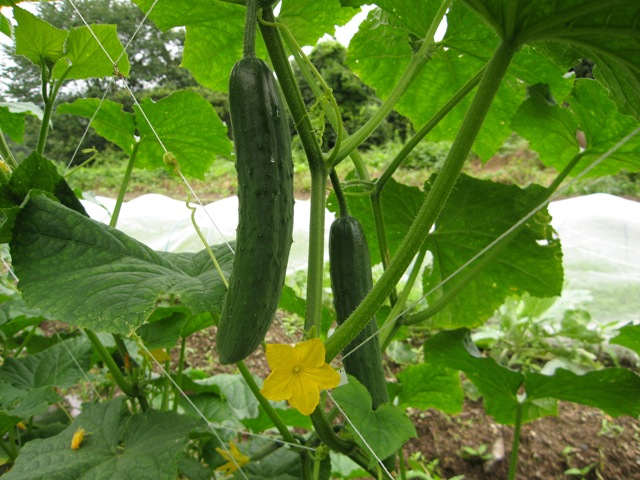
This is a quick healthy cucumber pickle recipe. It is so simple that you don’t even need to use a knife.
I break a cucumber with a rolling pin and my hands. This is a traditional way. It doesn’t take time to marinate when you follow this way because irregular surfaces can absorb the sauce easily.
Cucumber is high in potassium and water. Therefore it is effective for our health to eat cucumber.
I add ginger to the pickle sauce. Ginger is very nutritious and healthy. It helps our blood flow, helps speed up our metabolism, and blocks the oxidation process in our bodies.
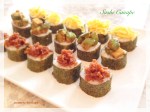
This “Sushi Canapé” recipe is totally original and great for a potluck. The ingredients are easy and it is a simple finger food.
The manner for making a sushi roll for this dish is not traditional. I came up with an easy way to roll which everybody can do without fail. But the taste is totally like regular sushi! You can top it with whatever you want such as smoke salmon, fish row, vegetables and so on. Once you know this recipe, you can serve Japanese sushi to your family and friends!
Enjoy your sushi roll!!
{Ingredients (15~20 canapés)}
2 pints Steamed Rice
3 beaten eggs
¼ lb. Ground Chicken
1 Avocado
¼ tsp. Wasabi Paste or Organic Wasabi Powder(combine with water to make Wasabi paste)
This very flavorful soup brings you great nutrition because the ingredients are chicken, green onion, ginger, dried shiitake mushroom and kelp. This dish is high in vitamin A, vitamin B, vitamin E, vitamin D, minerals, beta-carotene, allicin, calcium, protein and so on. Also it is low calorie and low fat. This dish makes you warm, gives your metabolism a boost, and helps improve your immunity so it is great to help you recover from sickness and get back a good appetite.
I highly recommend eating kelp occasionally. Recently, it is easy to get dried kelp at many grocery stores and at most Asian markets in the US. Japanese use kelp for Dashi stock and side dish like pickles. Dashi stock is used as seasoning in Japanese dishes. We use several kinds of Dashi stock such as dried anchovy, dried bonito, dried shiitake, dried kelp and so on. The kelp Dashi stock is great to compliment exquisite tasting ingredients. Kelp helps maintain your body’s alkaline. Also kelp has a good amount of fucoidan and iodine which are essential nutrients (in moderation) for humans.
{Ingredients (servings 2)} *Click BLUE TEXT to link to the product on Amazon*
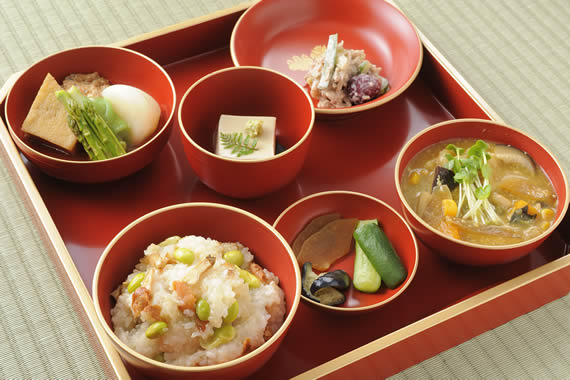
In the Japanese diet, simmered vegetable dishes are very important to fulfill the terms of the Japanese basic meals rule, which is called “Ichi-juu, San-sai.” This basic meals rule means basic meals should consist of one bowl of cooked rice, one kind of soup and three vegetable or fish side dishes.
Also simmered vegetable dishes are very common in Mahayana Buddhist cuisine for Buddhist monks. These dishes are an important nutritional source for the monks who are forbidden from eating meat and fish.
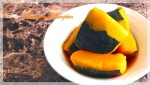
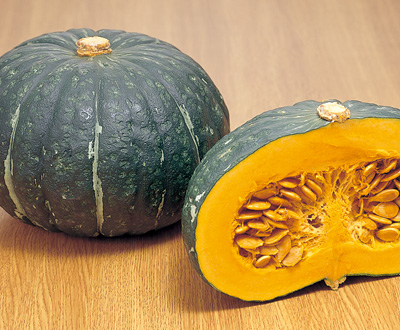
In the Japanese dish, C. maxima pumpkin is a common ingredient. It is high in vitamins, potassium, fiber and beta-carotene. The taste is very sweet. We also use this pumpkin for sweets. Interestingly the pumpkin is lower in calories and carbohydrates than bananas!
This recipe is incredibly easy. You can put water, Japanese common seasonings and the pumpkin in a pan at the same time and just simmer. We don’t use Dashi stock because the pumpkin has great flavor itself.
Steaming is a simple and healthy way to cook. And you can steam in the oven so it is very easy! Steamed dishes are very flavorful, the ingredients are tender, and steaming helps keep all of the ingredient’s nutrition!!
Steamed fish in aluminum foil is a traditional Japanese dish; although Japanese used to use paper instead of aluminum foil. Steaming this way has many practical benefits such as not keeping a fish smell inside the house from cooking, using fewer dishes, great preservation of each ingredient’s nutrition, condensation of amazing flavor and so on. I used Tilapia, onion, carrot and green onion. You can also use a variety of different vegetables, most kinds of fish and shellfish, a variety of meats and so on. You can taste each ingredient’s great flavor, which makes this approach different from other cooking methods.
Tilapia is high in potassium and vitamin D, E and of course omega-3. And also it is bland-tasting so you can cook it in many ways, like frying, steaming, sauté, baking and so on.
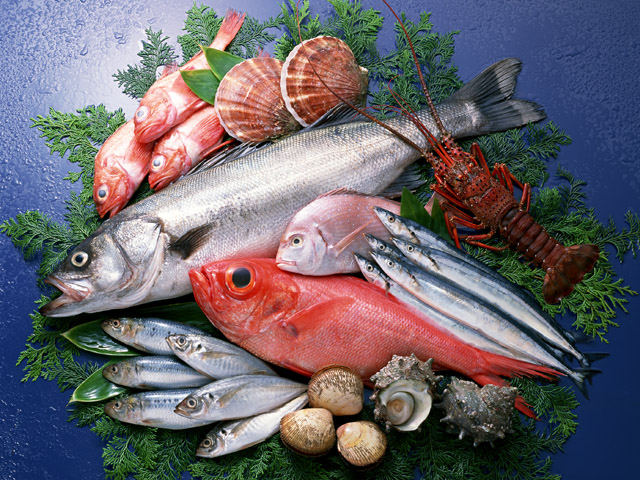
Japanese eat fish a lot so I highly recommend eating fish at least occasionally to stay healthy.
This chicken meatball dish is incredibly flavorful! I love it!!! The ingredients are chicken, egg, green onion and ginger so it is very healthy (low fat and low calorie!!).
The meatballs themselves have a slightly salty taste so you can use the meatballs for your salad, pasta, soup, sandwiches and so on.
Today I introduce you to chicken meatballs TERIYAKI. It has a sweet-salty taste, which is made from common Japanese seasonings: soy sauce, cooking Sake, sugar and Mirin, so it is not a heavy taste. I am sure you won’t be able to stop eating once you’re first bite!!
Many people have soy sauce in the house in the US. You can also use white wine instead of cooking Sake (The dish tastes little bit different though).
I strongly recommend that buy Mirin and keep it in your home for cooking. It is sweet cooking rice wine and adds great sweetness and Umami to dishes, and importantly Mirin also reduces the fish smell in seafood dishes. You can use Mirin in most Japanese cooking, can use it when you need sweetness in any dish, and you also can brush your sweets with Mirin and beaten egg yolk right before you bake so they turn a nice brown and taste slightly sweet. This sweetness comes from rice saccharifying amylase.
Enjoy these incredibly healthy and flavorful Japanese-style chicken meatball TERIYAKI!!
{Ingredients (20 small balls)} *Click BLUE TEXT to link to the product on Amazon*
Today I introduce you to a simple and healthy vegetable croquette recipe. This time I cooked the croquette in the oven so there is no need to worry about hot oil and messing up a kitchen. The ingredients are pumpkin (C. maxima), onion and carrot.
The differences between this recipe and the potato croquette recipe I posted earlier are taste and nutrition. I used C. maxima pumpkin (Kabocha), which is common in Japan. C. maxima pumpkins are especially high in vitamins, potassium, fiber and beta-carotene. They have more of a strong sweet taste than butternut squash, are not soggy and taste very good. So this kind of pumpkin is good for simmering dishes, a traditional style in Japanese cooking.
*Click picture to link to this product on Amazon*
In this recipe I show you my mother’s original batter for fried dishes. Normally fry-batters are made from flour, egg and panko (bread crumbs). My mother’s batters are an egg mixture (egg, flour and white vinegar) and panko (bread crumbs). The white vinegar makes the croquette batter very fluffy texture. You can use this egg mixture for any fried dishes such as fried chicken. Please try it!
{Ingredients (12 balls)} *Click BLUE TEXT to link to the product on Amazon*
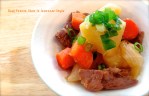
Nikujaga (Japanese style Beef-Potato Stew) is a Japanese simmered dish with a sweet-salty seasoning. It is very popular and everybody likes it.
This dish is one of the “Homemade taste” dishes, and in old Japanese traditions women who can cook this kind of simmered dish were considered full-fledged wives.
Interestingly, in 1878, a person who had beef stew when visiting England explained to a Japanese chef how the beef stew tasted, and the chef cooked it using his imagination. Eventually that’s where Nikujaga came from. That’s why the ingredients are similar to beef stew.
In Japanese simmered dishes, Dashi stock is the most important thing to add Umami to the dish. I used Kelp Dashi stock this time because I wanted to bring out the flavor of the ingredients. Please see the post on Kelp Dashi stock as a reference.
{Ingredients (servings 2)} *Click BLUE TEXT to link to the product on Amazon*
½ lb. Beef (sliced meet)
1 Potato
1 Carrot
1 Onion
1 ½ cups Kelp Dashi stock
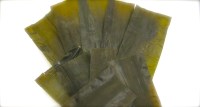
(Recommended Dried Kelp for Dashi stock) Dashi Dried Kelp
This Ginger Soup is my mother’s original recipe. The ingredients are ginger, garlic, soy milk, onion, carrot and so on. Because of this, the dish makes you warm, helps your digestion, improves immunity, and speeds up your metabolism. I used to have the dish when I didn’t feel well. The dish has great flavor and incredible taste.
The nutrition in Napa cabbage is similar to that in regular cabbage, but it is lower in carbohydrate and calories than cabbage. Napa cabbage has Isothiocyanate, so it is good for digestion.
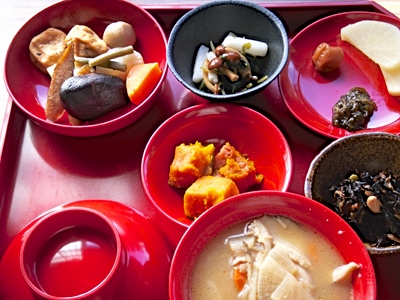
Importantly, Napa cabbage is an ingredient essential for Buddhist cuisine. Buddhist cuisine is a dish for Buddhist monks who are forbidden from eating meat and fish (Mahayana Buddhism). There are several detailed rules for cooking Buddhist cuisine.
For example:
Using the following in one meal.
5 cooking methods : Raw, Simmer, Bake, Fry, Steam
5 seasonings: Sweet, Acid, Salty, Gingery, Bitter
5 colors: Red, White, Green, Yellow, Black
In Buddhist cuisine the focus is on the minimum nutrition necessary for a human being. The goal is to not take too much energy and nutrition, and to be grateful for all life on earth. Recently, people on a diet or who have been fasting tend to eat Buddhist cuisine after finishing the diet or fast, because it is easy on the stomach and healthy. We can have real Buddhist cuisine in some temples so it is popular with foreigners too.
Japanese healthy diets are based on Buddhist cuisine. On my site, there are some dishes that reflect Buddhist cuisine.
Enjoy this healthy ginger vegetable soy milk soup!
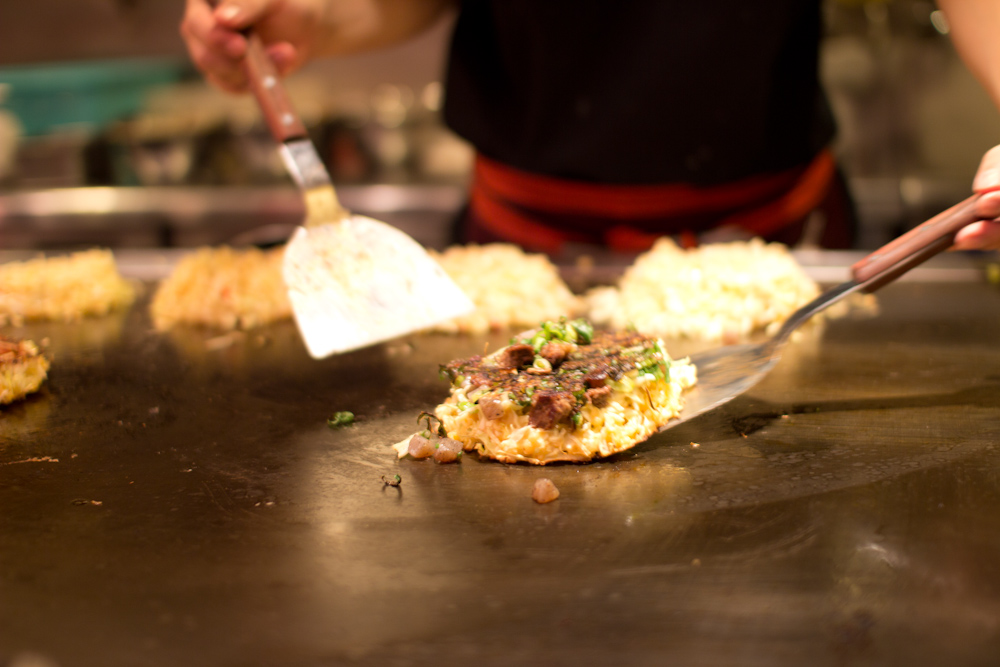
Okonomi-yaki (Japanese-style savory pizza pancake) is a traditional, well loved, representative cuisine from the west part of Japan (Kansai region). The recipe is very simple. It includes a baking mixture of flour, water, vegetables, shellfish, meat and so on.
In Japan there are many festival days in summer and many food stalls sell Okonomi-yaki (and usually have long lines because it is so delicious). These stalls cook it on a big cast-iron pan.
This dish is very delicious and easy to cook. It also has a lot of nutrition in one plate, so it was my family’s regular dinner on Sunday, and my father used to cook (this means very easy to cook because my father couldn’t cook anything else)
My mother always added ground dried anchovy to the mixture to add an anchovy Dashi stock flavor and fabulous nutrition such as calcium and DHA. You can put ground dried anchovy in most dishes to make the dish healthier. It works for omelets, soups, salad dressings, casseroles, pasta, and so on. Dried anchovy adds a slightly salty taste, so it doesn’t bother your dish’s balance. It is easy to grind dried anchovy with food processor (and we can get it at most Asian markets in the US).
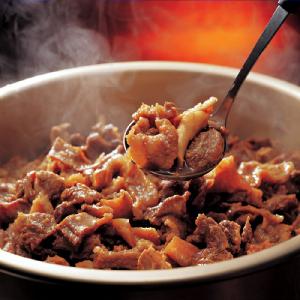
In my recipe, I use “Japanese Sweet Ginger Beef” in the Okonomi-yaki dish. This makes the dish taste great and flavorful. Please see the “Japanese Sweet Ginger Beef” recipe to learn how to prepare the beef.


 (combine with water to make Wasabi paste)


 for rolling sushi











 Your Home for Homemade Japanese Food