How to cook "with visual instructions" "using familiar ingredients from your local grocery stores" healthy, traditional and delicious Japanese dishes!!
This is an idea for a quick breakfast recipe. It takes about 10 minutes to prepare and it is also delicious and healthy!!
To make the dish healthier, I cook scrambled egg with canned tuna. Also I add steamed edamame to the plate. When you season the edamame with butter and salt, it becomes like a side dish of corn.
Edamame is high is vitamin B1, vitamin C, protein, fiber, iron, potassium, and so on. Because of the protein and the iron, edamame is a great ingredient for breakfast.
As for the tuna, my mother always said “You can be more smart and do great on tests in school if you eat fish”. She stretched a story about DHA to make me eat breakfast but it was not totally a lie. DHA increases blood vessel elasticity and improve the function of red blood cells so people say it helps make your brain more active.
I hope this recipe will be one of your favorite breakfast recipes!!
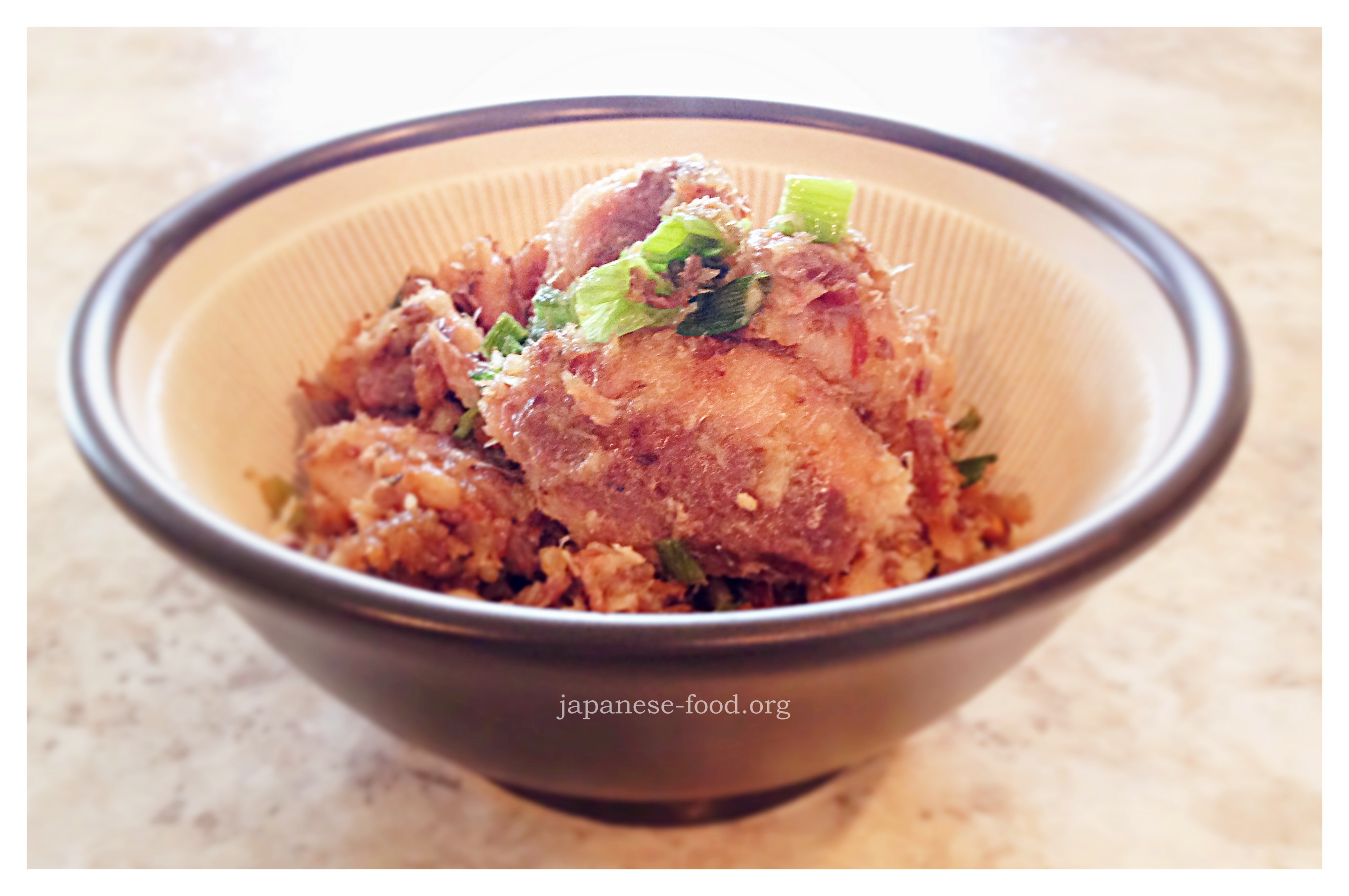
Have you ever eaten canned sardines!? It is a great pantry food, which is very useful and delicious! Today I introduce you to “Sautéed Sardines”. This is a canned sardines recipe that is very flavorful, nutritious, and quick!
I often use canned sardines as a salad topping, sauté dish, pasta ingredient, pizza topping, on rice bowls, and so on.
As you know sardines are very substantial. They are high in protein, calcium, vitamin D, DHA (docosahexaenoic acid), EPA (eicosapentaenoic acid), vitamin Bs, coenzyme Q10, minerals, and so on. DHA works to activate the brain and EPA works for decreasing LDL cholesterol concentration in the blood and for boosting HDL cholesterol levels. http://nurse-web.jp/kouka/sardine/http://www.wakasanohimitsu.jp/seibun/sardine/ I highly recommend eating sardines (including canned sardines, dried anchovy, or canned anchovy) everyday.
This time I used skinless and boneless canned sardines, but many canned sardines have skin. Even if your canned sardines have skin or bone, you can follow this recipe (You can eat the skin and bones which are high in calcium).
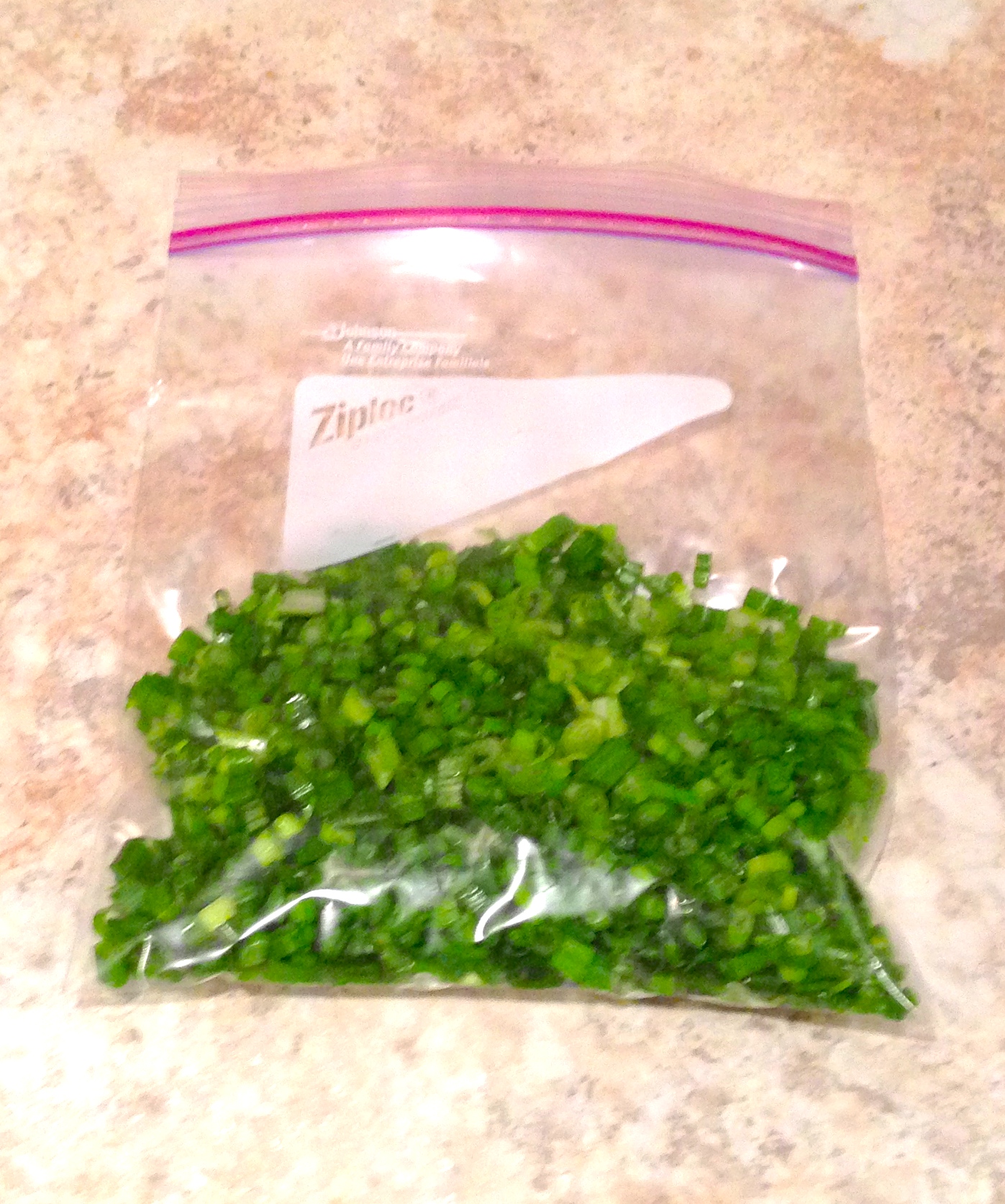
In addition, minced green onion is an essential ingredient in the Japanese diet so I always keep minced green onion in the freezer. I add the frozen minced green onion to the dish during the very last part of cooking process. To store, put minced green onions in a freezer bag and place in the freezer. Please use within a month.
Today I introduce you to steamed white rice with green peas. The Japanese process for cooking rice is a little complicated, so in this recipe I show you the easiest way to cook steamed rice. It takes about an hour, but you don’t need to do much.
We have many kinds of seasoned-steamed rice recipes, because rice is the most important carbohydrate in the Japanese diet. Japanese rice is short-grain rice which is soft, sticky and a little bit sweet in taste. This is good for ease of digestion and also great for making Sushi rice.
The “Green Pea Rice” in this recipe has a slightly salty taste and a very tender green pea texture so even kids who don’t like green peas tend to eat this rice happily.
Green peas are high in protein, vitamins, minerals, fiber and so on. Green Peas also have more vitamin B1 and fiber than many vegetables. But the nutritional value can weaken under the heat so when you cook, you can add the green peas to the recipe as the last part of the cooking process.
I love rice but I don’t have time to cook it for every meal so I always cook large amounts of steamed rice and freeze some of it. To store steamed rice, put cooked rice in a freezer bag and keep in the freezer. When you want to heat it up, you can microwave on a microwavable dish for 2~2:30 minutes. Please use the frozen rice within a month.
This is a common recipe for bacon-wrapped asparagus in Japan. We wrap a cut asparagus with a piece of bacon. The dish is usually pan-fried or grilled. You will often see bacon-wrapped asparagus on a long stick on the menu at Yakitori restaurants in Japan. When making it as a homemade dish, we usually use a toothpick instead of the long stick because it is easy to cook. But be careful about the toothpicks when you and your family eat. Of course you can serve without toothpicks even though the bacon wrap might come off.
I use turkey bacon in this recipe but you can use any kind of bacon you want. And also if you or your family don’t like using cooking Sake or white wine for the dishes, you can substitute stock or broth for those.
We have this dish as a side dish and we sometimes put it in our lunch boxes.
In Japan, some kindergartens, most elementary schools (1st~6th grade) and some junior high schools (7th~9th grade) serve school lunch. If the school doesn’t have school lunch, we bring boxed lunches (sometimes the school also has a small shop to get lunch). My mother made boxed lunches for me and my sister all the time when our school didn’t serve lunch. We loved her lunch boxes so much!!
This is one of common Japanese school lunch.
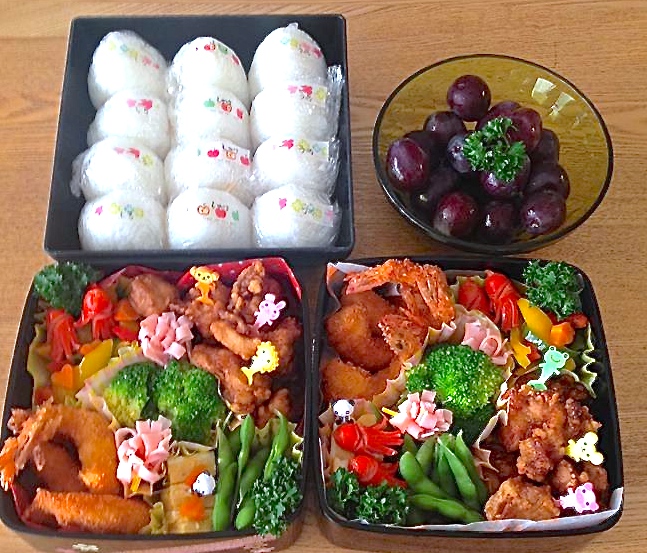
Recently, many Japanese mothers cook very cute lunch box dishes for their kids, which we call “Character Bento”. They decorate their lunch as cartoon’s characters with many ingredients to make their kids happy to eat everything. I really respect the mothers because they get up very early, prepare their family’s breakfast and a wonderful lunch box for their kids (some of them prepare lunch boxes for their husbands as well, not “Character Bento” though), and then many of these mothers get ready to go to their own work!
My Japanese friend made these boxed lunches! It is incredible!!! The 2 pictures are “Character Bento” for her boys. The 3rd one is a normal Bento for family event.
I recommend this dish with any meal. If you want to have it for breakfast or in a lunch box, you can prepare it the previous day and cook it in the morning, or you can cook it the previous day and microwave in the morning, because the cutting, wrapping and cooking can take a little extra time, especially in the morning.
{Ingredients (servings 2)}
10 Asparagus spears
10 slices Turkey Bacon (any kind of bacon is okay)
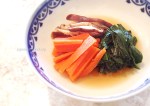
I will introduce you to one more traditional Japanese vegetable side dish which is called “Braised Eggplant”. This is also from Buddhist cuisine. It is very delicious, healthy and low-calorie!
If you like eggplant, I highly recommend you try this! You can enjoy the flavorful, tender, and yummy eggplant. The recipe is very easy and very traditional. I simmer eggplant in Japanese Dashi stock, soy sauce, cooking Sake and Mirin. If you like the flavor in Japanese dishes you should keep soy sauce, cooking Sake, Mirin and Dashi stock on hand (here is my Dashi stock recipe in PDF: Homemade Anchovy Dashi Stock, Kelp Dashi stock ) (also some Asian markets carry useful Dashi stock powder). If you want to try more healthy dishes but you are not a big fan of Japanese flavors, you can just simmer the eggplant in vegetable stock and season with a pinch of salt and pepper. This is also a healthy and low-calorie dish. Unfortunately, however, if you cook it this way you will not get the protein that we get from soy sauce. In fact, my family doesn’t eat soy beans often, we usually get the soy nutrition from soy sauce, Tofu, Miso (soy bean paste), Natto (fermented soy beans), soy milk and so on.
In this recipe, I didn’t peel the eggplant because one of the important nutrients, Anthocyanin (antioxidant), is found in high amounts in eggplant skin. If you don’t like the gooey texture that the skin adds you can peel the eggplant.
{Ingredients (servings 2)}
½ Eggplant
1 cup Kelp Dashi Stock
(Recommended Dried Kelp for Dashi stock) Dashi Dried Kelp
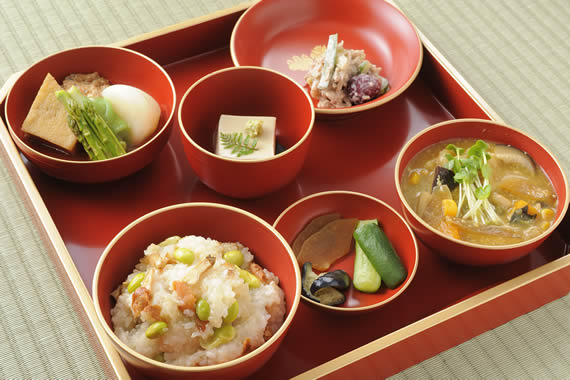
People have use this recipe since about 1300 years ago. This dish is typical Buddhist cuisine. Buddhist cuisine is cooked based on Buddhist concepts. The ingredients are mainly beans and vegetables. But the dishes are flavorful and nutritious because they were created to charge the energy of Samurai.
This recipe is a basic Japanese dish in which I cut vegetables and simmer in Japanese Dashi stock. The Dashi stock is the most important ingredient. If you can’t prepare Dashi stock, you can use vegetable stock or chicken stock as a substitute for Japanese Dashi stock. Of course the flavor will change but it will still be healthy! In a similar way, you can use white wine as a substitute for cooking Sake.
This is a side dish so you can have it along with or in place of a salad with your meal!
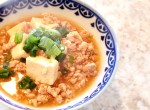
Mapo-Tofu is a popular Chinese dish. This recipe is totally my mother’s creation based on Mapo-Tofu. My mother came up with this recipe because the original dish is so spicy and I couldn’t handle it. This dish is very healthy because it has great protein, which comes from a combination of meat and tofu, so we always had this Non-Spicy Mapo-Tofu in our house.
The recipe is so easy to cook. It basically involves cooking ground chicken and tofu in chicken broth and then seasoning it in the same pan.
You can also use any kind of ground meat and any kind of broth in this recipe.
I recommend you enjoy tasting everything on the plate, the meat, the tofu, and the soup flavor! Because of the finished presentation you may think of it is a soup dish, but we eat it as a main dish with steamed rice.
Today I will introduce you to a yummy light tasting, quick and healthy pasta dish! You don’t need to cook sauce in advance for this dish. You can put boiled pasta, drained tuna, and cut lettuce in a pan at the same time, cook for a few minutes and season. You can even cook everything in one pan. Boil the pasta, drain and cook in the same pan!
I usually don’t use canned food, but I always keep some canned tuna in my pantry because its stays good for a long time, is very useful, healthy and delicious. Tuna is a great source of protein and has other great nutritional benefits, such as vitamins, minerals, DHA, EPA, Omega-3 and so on. A Japanese tuna company published a study showing that fresh tuna and canned tuna have almost the same level of nutrition. (https://www.hagoromofoods.co.jp/knowledge/faq/faq_012.html). Canned tuna comes in water or in oil. I tend to choose tuna in water because it has less calories. Tuna in water has about 1/4 less calories that tuna in oil. But in fact, tuna in oil has more nutrition than tuna in water. So if you care about calories and protein more than other vitamins or minerals, you might want to choose tuna in water.
In this recipe, I use spaghetti, but you can use any kind of pasta you want. It is so easy, healthy, and delicious so I recommend it for lunch and/or for your weekday dinner!
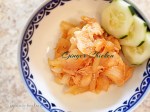
This is an incredibly flavorful homemade chicken dish marinated mainly with ginger and soy sauce.
As you know, ginger is extremely healthy.
It has Cineol (known generally as Eucalyptol), which is a scent ingredient. Cineol increases our appetite and makes our body recover from fatigue. Because of this, I eat ginger a lot in the summer time.
When you cook ginger, Gingerol, which is flavor ingredient, changes chemically to Shogaol. This warms up our body and increases our metabolism. So I also eat ginger in winter time. I use ginger in my meals any time to be healthier!!
In this recipe I use chicken, but you can use pork instead of chicken if you prefer. If you use pork just make sure it is sliced thinly.
Also, you can use white wine as a substitute for cooking Sake. When you use cooking Sake, however, you get more wonderful Japanese flavor.
This is a delicious chicken breast and vegetables recipe. The best point to this recipe is that it is very quick and tasty!! You don’t need to heat oil up or preheat your oven. Just prepare the ingredients and microwave!
This is totally my mother’s original recipe. She was a great cook and her dishes were awesome. That doesn’t mean she always took time to cook. She was also working so she kept creating her recipes to be quicker and more delicious!!
If you have chicken meat, you don’t need to go grocery shopping to cook this recipe. I just use colorful vegetables from my refrigerator. You can choose any vegetables you want.
I recommend that you cook this recipe on week nights when you don’t have enough time to cook more time consuming dishes. And when you keep the leftovers in the refrigerator, you can eat it for your breakfast or lunch next day, which also saves your time!
 (short-grain rice)








 Your Home for Homemade Japanese Food