Your Home for Homemade Japanese Food

How to cook "with visual instructions" "using familiar ingredients from your local grocery stores" healthy, traditional and delicious Japanese dishes!!


4 Comments

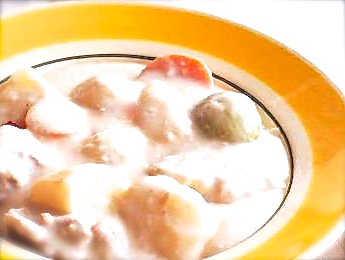
Creamy Chicken Stew

2004111150241

Japanese stew is based French stew, but adapted for Japanese tastes. We cook stew a lot in the winter. The two main types of Japanese stew are creamy white stew and beef stew.

Today I introduce you to Creamy Chicken Stew. Japanese usually cook stew with thick white roux.

999

But we can also cook with margarine, flour and soy milk to make the dish healthier. You can use butter and milk instead of margarine and soy milk.

This recipe is similar to Chicken Pot Pie recipe. So I am sure you will like cooking and tasting this stew.

The ingredients are taro, onion, carrot and chicken breast. Here, you can use potato instead of taro and chicken thigh instead of chicken breast if you prefer. However, Taro’s gruel, which is a result of mucin, makes the stew’s consistency rich and helps with digestion.

It is great to have during the cold winter months!!


{Ingredients (Serves 2)}

½ lb. Chicken Breast or Thigh

1 Carrot

1 Onion

4 Taros

2 Tbsp. Margarine

3 Tbsp. Flour

½ tsp. Salt

¼ tsp. Black Pepper

1 cups Chicken Stock

1 ¾ cups Soy Milk


Here is mu recipe in PDF: Creamy Chiken Stew


3 Comments

Simmered Taro and Chicken (Gluten-Free)

Simmered food is a traditional delicious Japanese dish. There are many kinds of vegetable or fish simmered dishes, such as root vegetables, eggplant, lettuce, flounder, anchovy and so on. My mother carefully taught me how to cook simmered dishes because traditionally these dishes are called “Homemade taste,” and in old Japanese traditions women who can cook simmered dishes were considered full-fledged wives, so my mother thought I might want to cook these dishes well for my husband. Of course, we live in a different era today and my husband and I often cook together so we have the great culinary tradition without the sexist overtones.

Basically, the ingredients are root vegetables so the dish includes a lot of fiber which is good for helping digestion. I also used chicken breast which it is low in fat and high in great protein.

141030_ooshima012_480_360

Taro is an important ingredient in homemade taste Japanese dishes. You can get it easily at most grocery stores in the US. Taro is high in potassium and water. Taro also is lower in calories than other kind of potato. When you chew taro, it can feel slightly gooey. This feeling comes from mucin, which is also in our saliva and stomach juice, and it helps the stomach function better.

Enjoy this traditional, nutritious and delicious dish!!

{Ingredients (Serves 2)}
*Click BLUE TEXT to link to the product on Amazon*

0.5 lb. Chicken Breast or Thigh

1 peeled Carrot

1 peeled Onion

4 Dried Shiitake Mushrooms

1 cup Water (leftover from soaking Shiitake)

3 Taros

5 tablespoons Soy Sauce REDUCED SODIUM [Gluten Free] (Organic)

5 tablespoons Cooking Sake

4 tablespoons Mirin Sweet Cooking Rice Wine

Here is my recipe in PDF: Simmered Taro and Chicken


4 Comments

Seasoned Rice with Vegetables (Vegan/Vegetarian/Gluten-Free)

Today I introduce you to Takikomi Gohan which is seasoned rice with vegetables. It has a similar taste to fried rice, but it is steamed so a lot healthier. You can add vegetables (preferably root vegetables), shellfish, and/or chicken, and seasoning to the rice and cook just like cooking white rice.

The basic arrangement for many Japanese meals is called “Ichi-juu, San-sai”, and consists of one bowl of cooked rice, one kind of soup, and three vegetable or fish side dishes. Takikomi Gohan includes rice and some vegetables or fish so it is a fuss-free dish to help arrange Ichi-jiru, San-sai. And, or course, it just plain delicious! Also steamed rice absorbs the Umami of the ingredients so it is very nutritious and delicious!!

We sometimes have Takikomi Gohan as a Bento (boxed lunch) because it is tasty even when it is cold.

This time I use Shiitake mushroom, Daikon, Carrot and Snow pea with Kelp Dashi stock. So it has lots of vitamins, minerals, carotene and fucoidan. Dried Shiitake mushroom has vitamin D so we might want to eat winter time which has short sunshine hours.


{Ingredients (for 2 people)}
*Click BLUE TEXT to link to the product on Amazon*

・2 cups Premium Rice, Medium Grain

・3 pieces Dried Shiitake Mushrooms

・1 cup Water (leftover from soaking Shiitake)

・1 ½ cups Tap Water (Depends on amount of rice being soaked)

・2 inches round, sliced Daikon (Japanese white radish)

・1 Carrot

・10 pieces Snow peas

・4 inches × 4 inches sheet of Dashi Dried Kelp

・4 tablespoons Cooking Sake

・4 tablespoons Soy Sauce REDUCED SODIUM [Gluten Free] (Organic)

・4 tablespoons Mirin Sweet Cooking Rice Wine


Here is my recipe in PDF: Seasoned Rice


Leave a comment

Rice-cake Soup (Vegan/Vegetarian/Gluten-Free)

Ozouni (Rice-cake soup) is a celebratory dish, and one of the dishes we eat on New Year’s day.

When we eat this, traditionally we give thanks for last year’s harvest and wish for a good harvest in the coming year and for the safety of our family.

Interestingly, the ingredients are different depending on the region. Some people dissolve White Miso (Soy bean paste) in the broth. Some people use sweet rice cake which has sweet bean paste in it.

Today I introduce my mother’s Ozouni. I use normal rice cake, Daikon (Japanese white radish) and carrots. This makes the dish more celebratory because in Japan we usually use red and white color combinations in celebratory situations.

In Japan, New Year’s day is the most important day of the year and many Japanese spend New Year’s day with family, feeling grateful for everything and wishing for a good year for everyone.

Have a happy New Year!!


{Ingredients (For 2 people)}
*Click BLUE TEXT to link to the product on Amazon*

2 pieces of Rice Cake (JAPAN IMPORT)

½ carrots

1 inch cut daikon (Japanese white radish)

2 cups Kelp Dashi stock
(Recommended Dried Kelp for Dashi stock) Dashi Dried Kelp

2 tablespoons Cooking Sake

1 tablespoon Soy Sauce REDUCED SODIUM [Gluten Free] (Organic)

¼ teaspoon salt


Here is my recipe in PDF: Rice-cake soup

Here is “Kelp Dashi Stock” recipe in PDF: Kelp Dashi stock


10 Comments

Gomoku-Chirashi (Vegetarian/Gluten-Free)

Gomoku-Chirashi is a traditional Japanese home dish which is delicious and nutritious, and a kind of Chirashi-sushi. We enjoy it at parties with family at home, such as on New Year and Girl’s day (March 3rd).

The recipe here does not use fish or fish roe, but rather vegetables. We think dishes should have colorful ingredients such as red, green, yellow, brown and white so you can use any colorful vegetables you want.

Before the Japanese had refrigerators they used this recipe to preserve food.


{Ingredients for Sushi-Rice (For 2 people)}
*Click BLUE TEXT to link to the product on Amazon*

・2 ½ cups Cooked rice

・75 ml Rice Vinegar

・2 tablespoons Sugar

・1 ½ teaspoons Salt

{Ingredients for Gomoku-Chirashi}

・4 Dried Shiitake Mushrooms

・150ml Water (leftover from soaking Shiitake)

・1 Carrot

・2 Eggs

・2 tablespoons White Roasted Sesame Seeds

・1 tablespoon Dried Seaweed Flakes

・2 tablespoons Soy Sauce REDUCED SODIUM [Gluten Free] (Organic)

・2 tablespoons Sugar

・1 tablespoon Cooking Sake

・1/2 teaspoon Salt


Here is my recipe in PDF: Gomoku-Chirashi